
2025 Tax Automation Trends: How AI is Revolutionizing Small Business Accounting
Small business owners have traditionally spent up to 120 hours annually managing tax preparation and bookkeeping tasks.


One of the most significant advancements in tax automation is the development of intelligent classification systems that accurately categorize transactions with minimal human intervention.
Introduction:
The Rise of Intelligent Tax Classification Systems
Daily activities
Key Features of Modern Tax Classification Technology:
Machine Learning Algorithms:
Today’s systems learn from your business patterns, improving categorization accuracy over time
Automatic Tax Code Assignment:
Expenses are automatically mapped to the appropriate tax codes based on your business type
Multi-Currency Support:
Seamless handling of international transactions with automatic currency conversion and appropriate tax treatments
Receipt Scanning with 99% Accuracy:
The latest OCR technology can extract data from even damaged or poor-quality receipts
Predictive Tax Planning: Beyond Basic Calculations
Traditional accounting software has always been able to calculate current tax obligations, but the latest systems now offer predictive capabilities that transform tax planning from reactive to proactive.
How Predictive Tax Planning Works:
Scenario Modeling:
Test how potential business decisions will impact your tax situation before making commitments
Tax Saving Recommendations:
AI-powered systems identify potential deductions and credits specific to your business activities
Quarterly Forecasting:
Receive accurate estimates of upcoming tax obligations based on current business performance
Cash Flow Optimization:
Intelligent scheduling of tax-related payments to maximize business liquidity
Conclusion: The Future of Small Business Accounting
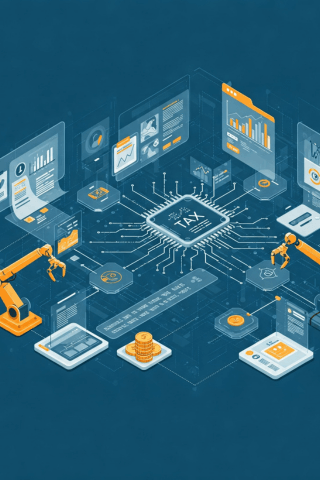
The tax automation landscape continues to evolve rapidly, with artificial intelligence, machine learning, and blockchain technology driving innovations that were unimaginable just five years ago. Small businesses that embrace these technologies are gaining significant advantages in efficiency, accuracy, and strategic financial management.
Stay In Touch
We’re committed to building lasting relationships with our clients. Reach out today and let’s keep the conversation going!

Frequently Asked Questions.
What is the importance of bookkeeping in business expansion?
Bookkeeping is crucial for business expansion as it provides accurate financial records, helps in making informed decisions, and ensures compliance with tax laws. It also aids in identifying areas for cost reduction and optimizing financial resources.
How do I choose the right bookkeeping system for my business?
When choosing a bookkeeping system, consider the size of your business, your budget, and your comfort with technology. Digital systems like accounting software offer efficiency and scalability, while manual systems may be more suitable for very small businesses.
What are some common bookkeeping mistakes that businesses should avoid?
Common mistakes include failing to track expenses, not reconciling bank statements regularly, and neglecting to back up financial data. Avoiding these mistakes can help prevent financial discrepancies and ensure data integrity.
How can bookkeeping help in business growth strategies?
Bookkeeping provides essential financial insights that inform business growth strategies. It helps identify profitable areas, manage cash flow for investments, and assess the financial viability of expansion plans.
What role does technology play in modern bookkeeping?
Technology plays a significant role in modern bookkeeping by offering automation, accuracy, and efficiency. Accounting software can automate tasks like invoicing, expense tracking, and financial reporting, freeing up time for strategic planning.
Simplifying Finances, Empowering Growth
TikBook
At TikBook, we know that accurate financial records are essential for business success. Our expert team provides comprehensive accounting and bookkeeping solutions for businesses of all sizes. Whether you need to update records, manage invoices, or streamline financial reporting, we offer tailored services to meet your needs.
India
Corporate Office
No. 295/35, Chinnathambi Building,
1st Floor, Jigani Link Road,
Near Rupesh Hotel, Opp Biocon Park,
Anekal – 560105 Karnataka, India.
USA
Corporate Office
26 Gabrielino drive,
Irvine 92617
CA, USA
+1- 7143309785
Help Center
For sales:
sales@tikbook.in
For Contact:
info@tikbook.in
For India (Chat to Action):
+91 63812 67188
For USA (Call to Action):
+1- 7143309785